At Tri-County Water, we believe informed homeowners make better water decisions. One term that often gets mentioned during water consultations but rarely explained in depth is “TDS.” So what exactly is TDS in water, and why should you care?
TDS stands for Total Dissolved Solids, a measurement of all the organic and inorganic substances dissolved in your water. These substances can affect your water’s taste, odor, clarity, and long-term safety. In this article, we’ll explore where TDS comes from, how it’s measured, what levels are acceptable, and how to reduce it when necessary.
What Are Total Dissolved Solids?
Total Dissolved Solids (TDS) include everything that’s dissolved in your water other than the pure H₂O molecules. These can be natural minerals like calcium, magnesium, and sodium, or unwanted substances like lead, pesticides, and industrial byproducts.
Some minerals, in the right amounts, are beneficial for your health. But too much of a good thing, or the presence of harmful contaminants, can negatively impact water quality and your home’s plumbing.
What Makes Up TDS?
TDS is a broad category that includes:
- Essential minerals (like calcium, potassium, and magnesium)
- Salts (such as sodium chloride)
- Heavy metals (like lead and arsenic)
- Organic matter from plant decay or wildlife
- Runoff from fertilizers, pesticides, or road salt
In Michigan, Indiana, and Ohio, TDS levels can vary dramatically between well water, municipal systems, and private springs. That’s why we test each water supply individually and tailor our recommendations accordingly.
Where Does TDS Come From?
Natural Sources:
- Soil and rock erosion
- Decaying vegetation
- Mineral-rich groundwater
Man-Made Sources:
- Agricultural runoff
- Industrial discharge
- Stormwater or road salt
- Outdated plumbing materials
Municipal water treatment doesn’t always remove all dissolved solids. In fact, in some cases, treatment chemicals themselves can increase the TDS count.
How Do You Measure TDS?
TDS is measured in parts per million (ppm) or milligrams per liter (mg/L) using a TDS meter. This tool works by checking how well your water conducts electricity, since dissolved ions like calcium and sodium enhance conductivity.
At Tri-County Water, our water testing professionals use calibrated instruments to accurately assess your water’s TDS and explain what those numbers actually mean for your home, health, and appliances.
What Is a Safe TDS Level?
Here’s a quick reference chart based on World Health Organization (WHO) and EPA guidelines:
TDS Level (ppm) Water Quality
- 0–300 Excellent
- 301–500 Good / Acceptable
- 501–1,000 Marginal – Investigate
- 1,001–2,000 Poor – Needs Treatment
- 2,000+ Unsafe – Not for Drinking
While the EPA recommends keeping TDS below 500 ppm for aesthetic and technical reasons, that standard isn’t enforceable—it’s a secondary guideline. That’s why regular water testing at home is essential.
Why Monitor TDS?
Tracking your TDS levels gives you insight into:
- Taste & odor issues: High TDS can make water taste salty, metallic, or bitter. Low TDS can make water taste flat.
- Health implications: High TDS might indicate the presence of contaminants like lead or arsenic.
- Plumbing damage: Excess minerals can cause scale buildup in pipes, faucets, and appliances.
- Appliance wear: Water heaters, dishwashers, and washing machines break down faster when exposed to high mineral content.
If left unchecked, high TDS can cost you more in repairs, replacements, and even health concerns.
How to Reduce TDS in Your Water
If your TDS levels are elevated, don’t panic. There are several proven methods to remove or reduce dissolved solids, depending on your specific water profile:
1. Reverse Osmosis (RO)
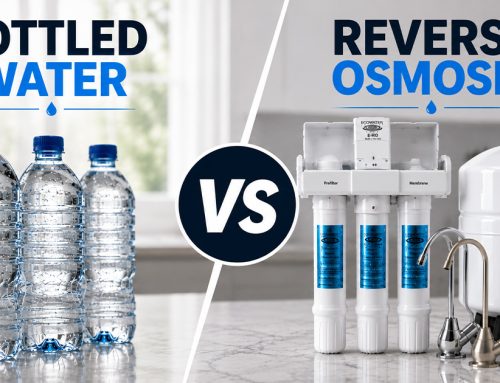
RO systems push water through a semi-permeable membrane to filter out most contaminants. This is one of the most effective ways to lower TDS—including PFAS, heavy metals, and bacteria. Many Tri-County Water RO systems come with optional remineralization filters to add back healthy minerals.
2. Water Distillation
This process mimics nature by boiling water into vapor, then condensing it back into a clean liquid—leaving most solids behind. Though effective, distillation uses more energy and is better suited for specific use cases.
3. Ion Exchange
This method swaps unwanted mineral ions (like calcium and magnesium) with sodium or potassium ions. Ion exchange is commonly used in water softeners and can be part of a multi-stage filtration strategy.
Should You Be Concerned About TDS?
TDS itself isn’t necessarily dangerous, but it’s a clue that something else might be going on. It affects:
- Taste and smell
- Appliance lifespan
- Possible contamination risks
A professional water analysis is the first step in identifying if your water is safe and high-performing—or if it’s time to take action.
Let Tri-County Water Help You Take Control of Your Water Quality
At Tri-County Water, we specialize in helping families throughout Michigan, Indiana and Ohio to better understand and improve their home water. Whether you’re dealing with hard water, strange tastes, or are simply curious about what’s in your water, we’re here to help.
We offer free in-home water testing, professional consultation, and a wide range of treatment solutions tailored to your water source, usage, and goals.
📞 Call us today at (800) 894-1818 or contact us online to schedule your complimentary water evaluation.
Better water starts with better knowledge—Tri-County Water has you covered.