Quick Answer
No, bottled water is not necessarily better than reverse osmosis (RO) water. Both can provide excellent drinking water, but they serve different purposes. Reverse osmosis systems produce filtered water directly from your tap, while bottled water offers convenience when you’re away from home. For many homeowners in southern Michigan and northern Indiana, a reverse osmosis system provides a long-term source of clean, great-tasting drinking water, while bottled water remains a convenient option for work, travel, and emergencies.
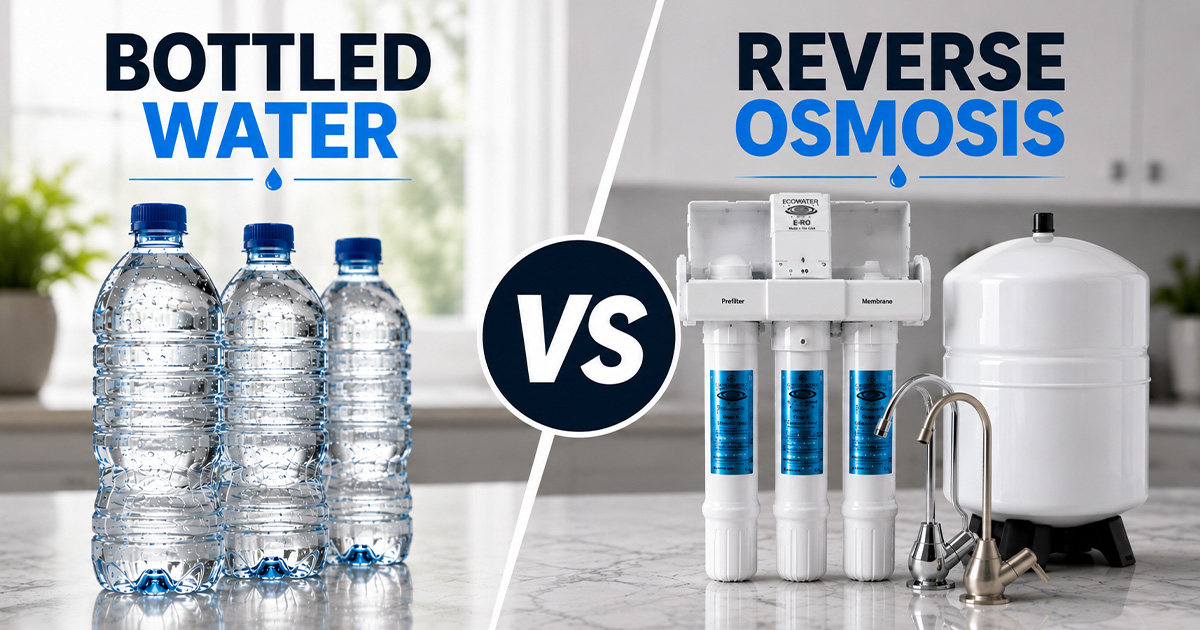
Bottled Water or Reverse Osmosis?
It's a question many homeowners ask after carrying another case of bottled water into the house or noticing hard water affecting the taste of their drinking water.
The truth is that bottled water and reverse osmosis are designed for different situations. Bottled water is portable and convenient, while a reverse osmosis system is designed to provide high-quality drinking water every day without leaving your kitchen.
For homeowners throughout southern Michigan and northern Indiana, the right choice depends on your family's habits, your local water quality, and how you plan to use your drinking water.
How Does Reverse Osmosis Work?
A reverse osmosis system uses several stages of filtration before water passes through a semi-permeable membrane. This process reduces many dissolved contaminants while improving the taste, odor, and clarity of drinking water.
Many homeowners install a reverse osmosis system because they want better tasting water for drinking, cooking, making coffee, filling reusable bottles, and producing clearer ice.
Depending on the system and proper maintenance, reverse osmosis can reduce many common contaminants, including:
- Total dissolved solids (TDS)
- Lead
- Arsenic
- Nitrates
- Chlorine taste and odor
- Certain PFAS compounds
A professional water test is always recommended before selecting any treatment system because every home's water is different.
What About Bottled Water?
Bottled water has earned its popularity because it's simple and convenient. Whether you're heading to work, traveling, or packing a cooler for a summer weekend, bottled water is easy to grab and go.
Many people are surprised to learn that not all bottled water comes from natural springs. Some brands use municipal water that has been purified, while others use spring water or reverse osmosis treatment before bottling.
In the United States, bottled water is regulated by the Food and Drug Administration (FDA), while municipal drinking water systems are regulated by the Environmental Protection Agency (EPA). Both have regulatory standards, but the source and treatment process vary depending on the brand.
Comparing the Long-Term Cost
If your family drinks bottled water every day, the cost adds up over time. Purchasing multiple cases each week can become significantly more expensive than producing filtered drinking water at home.
A reverse osmosis system requires an initial investment and routine filter replacements, but once installed, it provides drinking water whenever you need it. Many homeowners appreciate not having to store, carry, or recycle large amounts of plastic bottles.
Bottled water, however, still makes sense for many situations. It's ideal for road trips, sporting events, camping, offices, and emergency preparedness. For many families, bottled water complements a reverse osmosis system rather than replacing it.
Which Option Is Better for Homes in Southern Michigan and Northern Indiana?
Water quality varies considerably across our region. Some communities receive municipal water, while others rely on private wells. Hard water is common throughout much of southern Michigan and northern Indiana, and some homeowners may also be concerned about contaminants such as iron, manganese, sulfur odors, nitrates, or PFAS.
Because every water supply is unique, choosing the right solution begins with understanding what's actually in your water.
That's why Tri-County Water recommends starting with a professional water test before investing in any treatment system.
Our Recommendation
For most homeowners, reverse osmosis provides the best everyday solution for clean, great-tasting drinking water at home. It offers convenience, consistent water quality, and a lower long-term cost than purchasing bottled water for daily use.
That said, bottled water still has an important place. Keeping bottled water available for travel, work, recreation, or emergencies gives your family flexibility while enjoying the convenience of filtered water at home.
Many Tri-County Water customers choose both: a reverse osmosis system for everyday drinking water and bottled water delivery for the office, garage, vacation property, or busy lifestyle.
Frequently Asked Questions
Is reverse osmosis water healthier than bottled water?
Both can provide excellent drinking water. Reverse osmosis offers freshly filtered water at home, while bottled water provides convenience when you're away from home. The best choice depends on your needs and your local water quality.
Does bottled water use reverse osmosis?
Some bottled water brands use reverse osmosis as part of their purification process, while others use spring water or treated municipal water. The label will typically identify the source or treatment method.
Is reverse osmosis less expensive than bottled water??
For households that regularly purchase bottled water, a reverse osmosis system is generally more economical over the long term because it produces drinking water directly from your home's water supply.
Should I still keep bottled water if I have reverse osmosis?
Yes. Many homeowners use reverse osmosis every day while keeping bottled water available for travel, sporting events, work, and emergency supplies.
How do I know which option is best for my home?
A professional water test is the best place to start. Understanding your water quality helps determine whether a reverse osmosis system, bottled water delivery, or a combination of both is the right fit.
Whether you choose bottled water, reverse osmosis, or both, the goal is the same: providing your family with clean, great-tasting drinking water you can trust. If you're unsure which solution is right for your home, Tri-County Water can help you evaluate your water and recommend the option that best fits your family's needs.
Schedule your FREE Water Test and get answers from local water experts trusted by homeowners since 1966.