Quick Answer
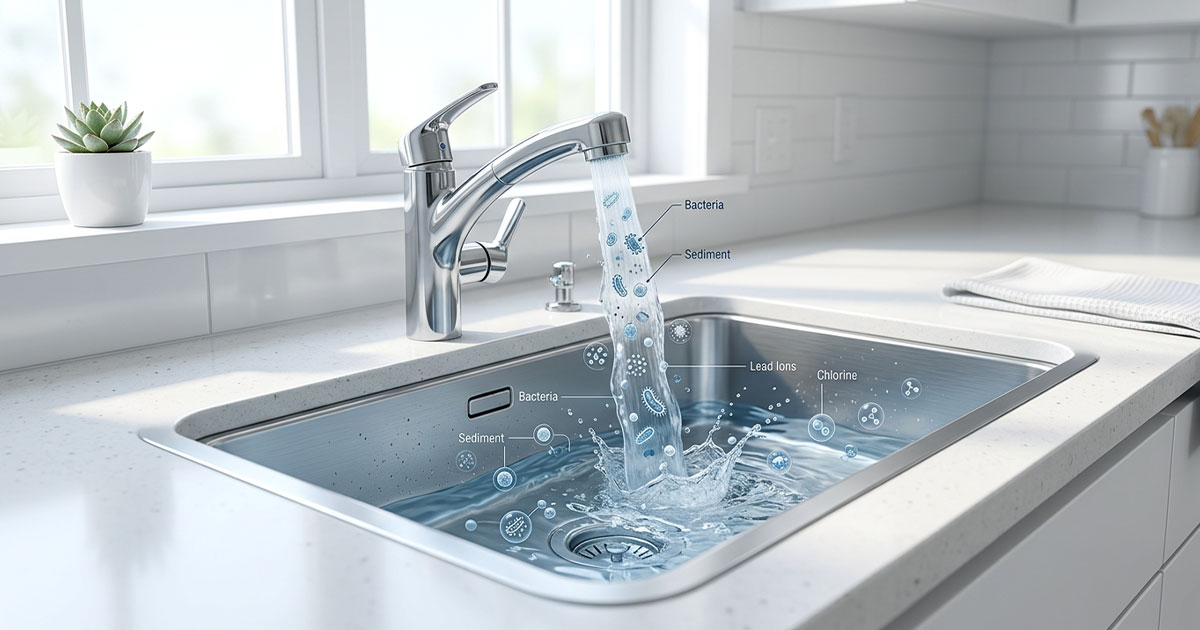
Your water can contain contaminants you can see, smell, or taste, as well as others that are impossible to detect without testing. Common concerns include lead, PFAS (forever chemicals), arsenic, nitrates, iron, manganese, chlorine, bacteria, pesticides, VOCs, and other dissolved substances. What is present depends on your water source, local conditions, plumbing, and whether you use municipal water or a private well.
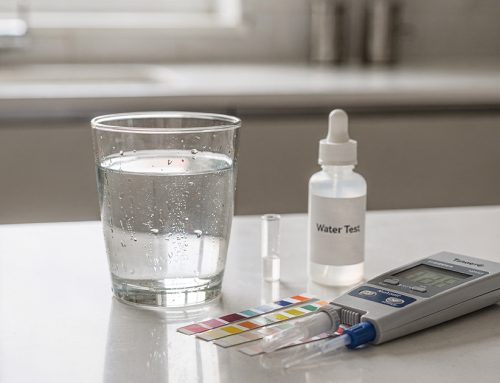
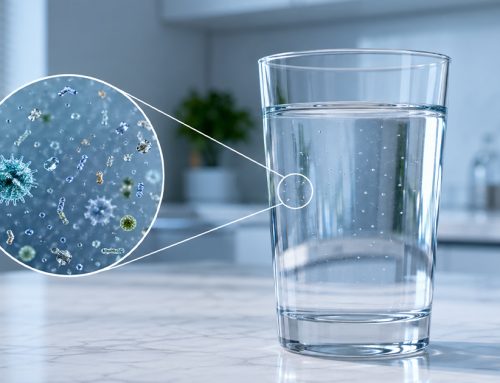
Clear water does not necessarily mean contaminant-free water. The only way to know what is actually in your home’s water is to test it. Once you know what is present, you can determine whether treatment is necessary and which type of filtration or water treatment is appropriate.
Water is one of the most essential parts of daily life, yet many homeowners do not fully understand what may be present in their water. From naturally occurring minerals to modern concerns like microplastics, water quality has become an increasingly important topic.
As research continues to evolve, so does awareness around what affects water and how it can be improved. This guide will break down the science behind common contaminants and explain how modern systems address them.
For a deeper breakdown of specific contaminant types and sources, explore our What Are Microplastics in Drinking Water? resource.
What Are Water Contaminants?
Water contaminants refer to any substances found in water that are not part of pure H2O. These can include natural elements, treatment byproducts, and environmental pollutants.
Common categories include:
- Sediment such as sand or rust
- Chlorine used in municipal treatment
- Hard minerals like calcium and magnesium
- Organic materials and trace chemicals
- Emerging contaminants such as microplastics
Not all contaminants are harmful at low levels, but their presence can affect taste, smell, and overall water quality.
How Do Contaminants Enter Your Water?
Contaminants can enter water at multiple points throughout the supply chain. Even treated municipal water can pick up additional elements before reaching your home.
Sources include:
- Natural groundwater conditions
- Aging infrastructure and pipes
- Agricultural and environmental runoff
- Municipal treatment processes
- Household plumbing systems
Because of these variables, water quality can vary significantly by location and even from one home to another.
Why Water Quality Matters for Your Home
Water quality impacts more than just drinking water. It affects appliances, plumbing, skin, and overall household efficiency.
Poor water quality can lead to:
- Scale buildup in pipes and fixtures
- Reduced appliance lifespan
- Dry skin and hair
- Unpleasant taste or odor
- Residue on dishes and surfaces
Understanding your water helps you make informed decisions about improving your home environment.
Common Contaminants Found in Residential Water
Homeowners may encounter a variety of contaminants depending on their location and water source.
These often include:
- Chlorine: Used for disinfection but can affect taste and odor
- Hard Minerals: Cause scaling and reduce efficiency
- Sediment: Visible particles from pipes or groundwater
- Volatile Organic Compounds (VOCs): Trace chemicals from environmental sources
- Microplastics: Tiny plastic particles detected in many water supplies
Each of these requires different filtration approaches depending on the level and desired outcome.
How Modern Filtration Systems Work
Modern water treatment systems are designed to address multiple contaminants using a layered approach.
Reverse osmosis systems:
- Push water through a semi-permeable membrane
- Remove dissolved solids and microscopic particles
- Improve taste and clarity
Whole-home filtration systems:
- Treat water at the point of entry
- Reduce sediment, chlorine, and other common elements
- Protect plumbing and appliances
To understand the science behind filtration performance, see How Reverse Osmosis Works (Simple Breakdown).
The Role of Microplastics in Water Quality
Microplastics have become a growing topic in water quality discussions. These are extremely small plastic particles that can enter water through environmental exposure.
They are typically introduced through:
- Breakdown of larger plastics
- Industrial and consumer waste
- Environmental runoff
While research is ongoing, many homeowners are seeking ways to reduce their presence in drinking water through advanced filtration systems.
Common Mistakes Homeowners Make About Water Quality
Many homeowners make assumptions about their water that can lead to poor decisions.
Common mistakes include:
- Assuming clear water means clean water
- Relying only on taste or smell
- Ignoring changes in water quality over time
- Believing all filters perform the same
- Expecting basic tests to detect all contaminants
Understanding limitations is just as important as understanding solutions.
How to Improve Your Water Quality
Improving water quality starts with awareness and the right approach.
Actionable steps include:
- Schedule a professional in-home water evaluation
- Identify key indicators such as hardness and chlorine
- Understand the difference between filtration types
- Choose systems based on your specific needs
- Maintain systems regularly for long-term performance
Taking a proactive approach ensures better results and long-term value.
Services That Help Improve Your Water
Choosing the right system depends on your home’s specific water conditions and goals.
Explore our Free In-Home Water Test to learn more about your water and available solutions.
Frequently Asked Questions
What are the most common contaminants found in drinking water?
Common drinking-water concerns include lead, PFAS, arsenic, nitrates, chlorine and disinfection byproducts, bacteria, pesticides, volatile organic compounds (VOCs), iron, manganese, and other naturally occurring or human-made substances. The contaminants present vary significantly by location and water source.
Can water look clear and still contain contaminants?
Yes. Many contaminants have no noticeable color, taste, or odor. Lead, PFAS, arsenic, nitrates, and certain chemicals can be present without changing how your water looks or tastes.
Is municipal tap water free of contaminants?
Not necessarily. Public water systems are regulated and routinely tested, but drinking water can still contain regulated contaminants within allowable limits. Water can also be affected by service lines and household plumbing after leaving the municipal treatment system.
Can private well water contain contaminants?
Yes. Private wells can be affected by naturally occurring minerals, bacteria, nitrates, agricultural runoff, chemicals, and nearby land use. Unlike public water systems, private wells are generally the homeowner's responsibility to test and maintain.
Does boiling water remove contaminants?
Boiling can kill many disease-causing microorganisms, but it does not remove most dissolved chemicals, metals, salts, PFAS, or other contaminants. In some cases, boiling can concentrate contaminants as water evaporates.
Does a water softener remove drinking-water contaminants?
A water softener is primarily designed to reduce hardness minerals such as calcium and magnesium. It should not be considered a complete drinking-water filtration system. Other treatment technologies may be needed depending on what testing identifies in the water.
Does reverse osmosis remove contaminants from drinking water?
Reverse osmosis can reduce a broad range of dissolved contaminants, but performance depends on the system, its filters and membrane, maintenance, and the specific contaminant. Water testing can help determine whether reverse osmosis or another treatment method is appropriate.
Conclusion
Understanding what is in your water is the first step toward improving it. From common minerals to emerging concerns like microplastics, awareness allows homeowners to make better decisions for their homes and families.
By combining education with modern filtration solutions, you can take control of your water quality. For deeper insights, revisit our What’s Really in Your Water? guide and continue exploring your options.