Quick Answer
Microplastics are microscopic plastic particles that can enter drinking water from environmental sources, infrastructure, and water treatment limitations. While their health impact is still being studied, they highlight the need for better water awareness, filtration systems, and regular evaluation of residential water quality.
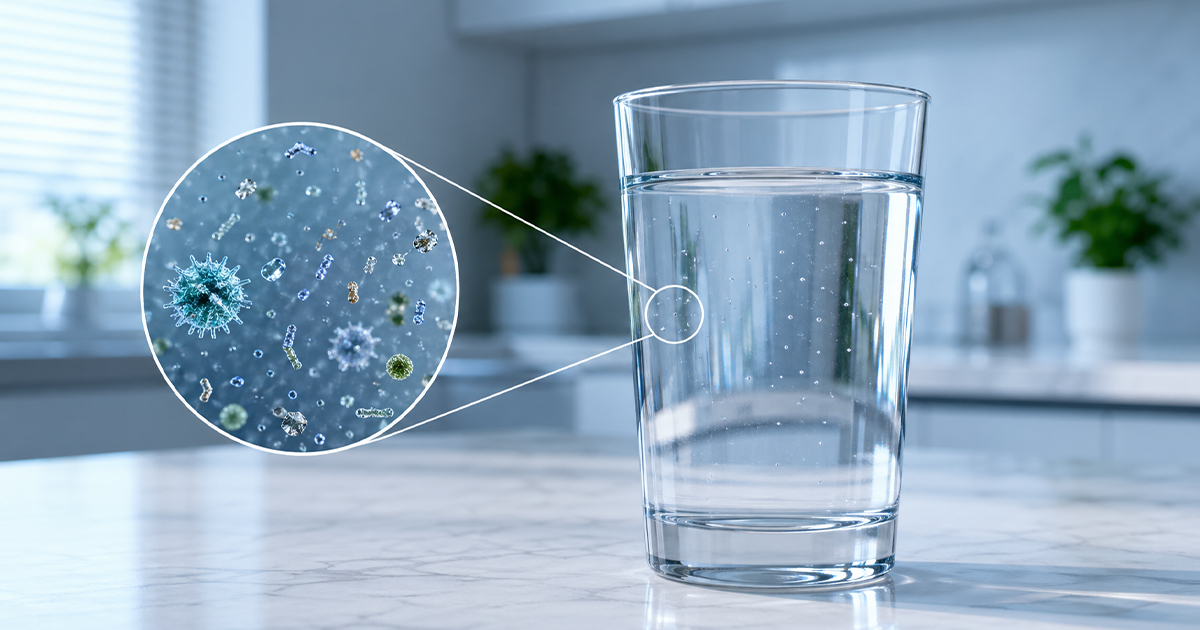
Most homeowners judge their water by how it looks, tastes, or smells. If it appears clear, it is often assumed to be clean. That assumption is becoming less reliable as more attention is placed on emerging contaminants like microplastics.
Microplastics are not visible to the naked eye, yet they are being studied in water systems across the world. To understand how they fit into the bigger picture, review our What’s Really in Your Water? A Complete Guide to Water Contaminants, Microplastics, and Modern Filtration.
What Are Microplastics?
Microplastics are plastic particles smaller than 5 millimeters. Many are far smaller, measuring in microns, which makes them undetectable without specialized equipment.
They originate from two main categories:
- Primary microplastics: Manufactured small particles used in products or industrial processes
- Secondary microplastics: Breakdown of larger plastics due to sunlight, friction, and environmental exposure
Because plastics are widely used, these particles are now found in air, soil, and water systems.
How Microplastics Enter Drinking Water
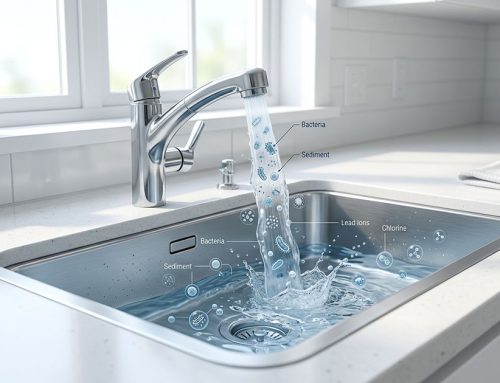
Microplastics can enter residential water in several ways. This is not limited to one source.
Environmental pathways:
- Runoff from roads and urban areas
- Degradation of plastic waste
- Atmospheric deposition into water sources
Infrastructure pathways:
- Aging pipes and distribution systems
- Storage tanks and municipal transport
Treatment limitations:
- Water treatment plants are designed for biological and chemical safety
- Not all microscopic particles are removed
This means even treated water can carry trace materials depending on the region.
Why Microplastics Matter for Homeowners
The concern around microplastics is not based on a single factor. It is part of a broader shift toward understanding invisible contaminants.
For homeowners, this creates three key realities:
- Visual clarity is not a reliable indicator of quality
- Water composition varies by location and infrastructure
- Emerging contaminants are not always included in standard testing
This is why more homeowners are starting with basic water evaluation rather than assumptions.
What Homeowners Can Actually Do
There is no single action that solves every water concern. However, there are practical steps that provide clarity and direction.
Start with awareness:
- Pay attention to taste, smell, and residue
- Compare tap and filtered water
Understand your baseline:
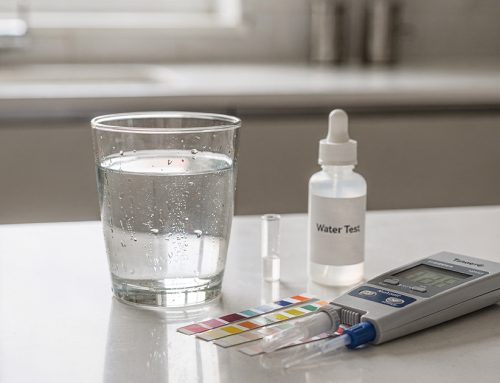
- Schedule a professional water evaluation
- Identify hardness, chlorine, and mineral levels
Know testing limitations:
- Most in-home tests do not measure microplastics
- Advanced analysis may require lab testing
Learn more in What a Home Water Test Can and Cannot Detect.
How Filtration Systems Fit Into the Conversation
Filtration systems are often discussed in relation to microplastics, but they should be viewed as part of a broader water quality solution.
Reverse osmosis systems are commonly used because they:
- Filter water through a semi-permeable membrane
- Reduce dissolved solids
- Improve taste and clarity
To understand the process in detail, see How Reverse Osmosis Works.
How can Tri-County Water Help
If you want to better understand your water, start with a local evaluation.
Explore our Free In-Home Water Test to see what is affecting your water quality.
Frequently Asked Questions
Are microplastics found in most drinking water?
Research suggests they can be present in many water sources, but levels vary widely depending on location and infrastructure.
Can I see microplastics in my water?
No. Microplastics are too small to be visible without specialized equipment.
Do home filtration systems remove microplastics?
Some advanced systems are designed to reduce microscopic particles, but performance varies by system type.
Should I test specifically for microplastics?
Most homeowners begin with general water testing. Specialized testing may be used for deeper analysis.
Why is microplastics research still ongoing?
Because detection methods and long-term impact studies are still developing.
Conclusion
Microplastics highlight an important shift in how homeowners think about water. The focus is no longer just on what can be seen, but also on what cannot.
The best first step is understanding your water as a whole. Revisit What’s Really in Your Water? to explore the full picture and available solutions.
Note: In-home water testing identifies key water quality indicators such as hardness and chlorine. Detection of specific contaminants, including microplastics, may require specialized laboratory analysis. Filtration performance varies by system type and water conditions.