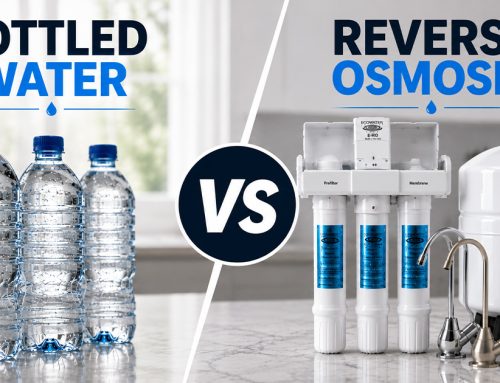
Research has shown that microplastics have been detected in many environments, including water sources. Municipal drinking water systems are regulated and treated to meet safety standards, but trace microscopic particles can still exist in natural water systems. Home water filtration technologies, such as reverse osmosis drinking water systems, are designed to filter extremely small particles and may reduce microplastics in drinking water.
What Are Microplastics?
Microplastics are extremely small plastic particles typically defined as being smaller than five millimeters in size. These particles can form when larger plastic materials gradually break down through sunlight, weathering, and environmental processes.
Microplastics can originate from many sources, including:
- Degradation of larger plastic waste
- Synthetic clothing fibers released during washing
- Tire wear particles
- Industrial plastic materials
- Packaging materials and consumer products
Because plastics are widely used in modern manufacturing and consumer goods, small particles can eventually enter natural environments such as rivers, lakes, and groundwater systems.
Can Microplastics Be Found in Tap Water?
Scientific studies conducted around the world have detected microplastics in many environmental water sources, including surface water, groundwater, and ocean water.
Municipal water treatment facilities use advanced treatment processes designed to remove sediment, contaminants, and microorganisms. These facilities operate under strict regulatory standards to ensure drinking water safety.
However, because microplastics can exist in extremely small sizes, research has shown that trace microscopic particles may still be present in some water sources even after treatment. Ongoing research continues to examine how microplastics move through water systems and how filtration technologies interact with these particles.
How Do Microplastics Enter Water Sources?
Microplastics typically enter water through environmental pathways rather than directly from drinking water systems themselves.
Common pathways include:
- Breakdown of plastic waste exposed to sunlight and weather
- Stormwater runoff carrying particles into rivers and lakes
- Washing synthetic fabrics that release microscopic fibers
- Industrial plastic materials entering waterways
- Degradation of larger plastic debris in the environment
Once in the environment, these particles can travel through natural water systems and eventually become part of surface water or groundwater sources.
How Modern Filtration Technology Addresses Microscopic Particles
Different types of residential water treatment systems serve different purposes.
Some systems focus on improving water softness, while others are designed to filter extremely small particles from drinking water.
Reverse Osmosis Drinking Water Systems
Reverse osmosis filtration systems use a specialized semi-permeable membrane designed to filter extremely small particles from water. These membranes typically filter at approximately 0.0001 microns, which is significantly smaller than the size of most microplastics. Because of this fine filtration capability, reverse osmosis systems are commonly used in residential drinking water purification systems.
Tri County Water installs advanced drinking water systems manufactured by EcoWater Systems, which are designed to improve drinking water quality through multi-stage filtration and membrane technology. These systems are typically installed under a kitchen sink and provide filtered drinking water through a dedicated faucet.
Whole-Home Filtration
Whole-home filtration systems are installed where water enters the home and help capture sediment and particles before the water travels through plumbing.
Depending on the filter rating, these systems can capture particles ranging from approximately 20 microns down to 1 micron.
While these filters help remove sediment and larger particles, extremely small microscopic particles are typically addressed through finer filtration technologies designed for drinking water.
Water Softeners
Water softeners perform a different function than filtration systems.
Water softeners manufactured by EcoWater Systems use a process called ion exchange to remove hardness minerals such as calcium and magnesium.
Softened water can help:
- Reduce mineral buildup on fixtures
- Protect plumbing and appliances
- Improve soap performance
- Extend appliance lifespan
Water softeners are designed specifically to address hardness minerals and are not intended to filter microscopic particles.
Why Water Testing Still Matters
Every home receives water from a unique combination of local infrastructure, plumbing materials, and regional water conditions. A professional in-home water test allows homeowners to better understand several important characteristics of their water, including:
- Hardness levels
- Iron content
- Mineral concentrations
- Overall water clarity
Tri County Water provides complimentary in-home water testing so homeowners can gain a clearer understanding of their water conditions and explore available treatment options if desired.
Understanding Water Quality Today
Water quality continues to be an area of active research and innovation. Modern treatment technologies allow homeowners to address many common water concerns, ranging from hardness minerals to drinking water filtration.
Learning how different systems function helps homeowners make informed decisions about improving their water experience.
For those interested in learning more about their water, a professional in-home water test can provide helpful insight into the characteristics of a home’s water supply.
Frequently Asked Questions
Are microplastics present in drinking water?
Scientific studies have detected microplastics in many environmental water sources. Municipal drinking water systems are treated and regulated to meet safety standards, though trace microscopic particles can still exist in natural environments.
What size are microplastics?
Microplastics are generally defined as plastic particles smaller than five millimeters.
Can water filtration reduce microplastics?
Certain filtration technologies, including reverse osmosis membranes, are designed to filter extremely small particles and may reduce microplastics in drinking water.
Do water softeners remove microplastics?
Water softeners remove hardness minerals such as calcium and magnesium. They are not designed to filter microscopic particles.
How can homeowners learn more about their water?
A professional in-home water test can help homeowners better understand the characteristics of their water and determine whether treatment systems may be beneficial.