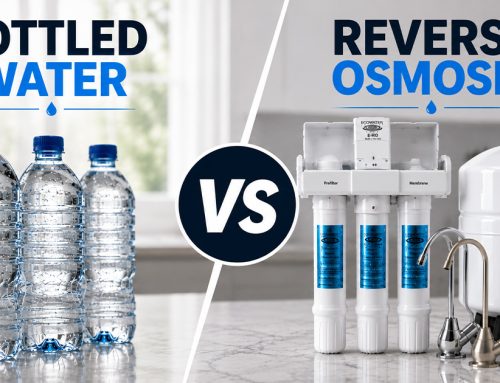
Bottled water is convenient. It is easy to grab, easy to store, and easy to take on the go. But behind that convenience is a massive amount of plastic waste.
Globally, more than 1 million plastic bottles are purchased every minute, according to industry and environmental reporting data. That equals hundreds of billions of bottles every year.
While recycling helps, the reality is that a significant portion of plastic bottles are never recycled. Many end up in landfills or as environmental litter, and plastic can take hundreds of years to fully break down. This is not about fear. It is about scale. When you zoom out, the numbers are staggering.
What Does That Look Like at the Household Level?
Let’s bring this closer to home.
If a family purchases:
- 2 cases of bottled water per week
- 24 bottles per case
That equals 48 bottles per week.
Over one year, that adds up to:
2,496 plastic bottles from one household.
Multiply that across neighborhoods in Jackson, Hillsdale, or Kendallville, and the volume of plastic quickly becomes hard to ignore.
Most families do not realize how quickly those bottles add up because they are purchased gradually throughout the year.
Why Recycling Alone Does Not Solve It
Recycling is important. But plastic recycling is not a perfect loop.
Unlike aluminum or glass, plastic degrades in quality each time it is recycled. Many water bottles are downcycled into lower-grade products rather than turned back into new bottles.
In addition:
- Not every bottle makes it into a recycling bin
- Contamination can prevent recycling
- Transportation and processing require energy
Reducing consumption at the source is often more impactful than relying on recycling alone.
Is There a Practical Alternative to Bottled Water?
Yes. And it starts inside your own home.
Many families buy bottled water because they do not fully trust their tap water. The solution is not necessarily to keep buying cases. The solution may be improving the water quality at the source.
Two common options include:
Reverse Osmosis at the Sink
A reverse osmosis system installs under your kitchen sink and provides high-quality drinking water directly from a dedicated faucet.
Whole-Home Filtration
Whole-home systems improve water quality throughout the entire house, addressing concerns related to taste, odor, and mineral content.
Pair either option with reusable stainless steel or BPA-free water bottles, and your home becomes your refill station.
No hauling cases.
No storing stacks in the garage.
No weekly restocking.
Your Tap Should Replace the Case
Most households already pay for water service. When you add the cost of bottled water on top of that, you are essentially paying twice.
Improving water quality at home allows you to:
- Reduce plastic waste
- Simplify your routine
- Control long-term costs
- Drink confidently from your own tap
It is not about eliminating bottled water completely. It is about reducing unnecessary plastic waste where possible.
Start With the Facts About Your Water
If you are buying bottled water because you are unsure about your tap, the first step is simple.
Test it.
At Tri County Water, we offer a free in-home water test to help you understand what is actually in your water and what solutions may make sense for your home.
Before buying another case, learn what your tap is capable of.
Schedule your free in-home water test today.
Frequently Asked Questions:
How much plastic waste does bottled water create?
Globally, more than 1 million plastic bottles are purchased every minute. That equals hundreds of billions of bottles each year, many of which are not recycled and end up in landfills or the environment.
How many plastic bottles does a household use per year?
A household that buys two 24-packs of bottled water per week uses approximately 2,496 plastic bottles per year.
Is bottled water recyclable?
Most bottled water containers are technically recyclable, but recycling rates vary and plastic quality degrades with each recycling cycle. Not all bottles are successfully recycled.
What is an alternative to bottled water at home?
Common alternatives include under-sink reverse osmosis systems and whole-home water filtration systems paired with reusable water bottles.
Does reverse osmosis reduce the need for bottled water?
Yes. A properly installed reverse osmosis system provides filtered drinking water directly from the tap, reducing the need to purchase bottled water.